Press Release. CRCF methodologies - EURAF calls for policy coherence to ensure that agroforestry delivers
Brussels, 18th February – With the release of draft EU Carbon Removal and Carbon Farming (CRCF) methodologies, European Agroforestry Federation (EURAF) is taking the opportunity to highlight key points from its response to the public consultation ending this 19th February.
EURAF welcomes the draft, particularly its strong recognition of agroforestry as a key carbon farming practice that offers multiple climate and biodiversity co-benefits, however, it also emphasises several necessary adjustments.
To improve legal clarity, consistency with existing EU legislation, and practical implementability across Member States, it is necessary to assure closer alignment with established CAP and LULUCF definitions, UNFCCC reporting practices, and the technical realities of monitoring, reporting and verification (MRV) – including the use of remote sensing and geospatial data. Clear and harmonised definitions for agroforestry, landscape features and forests are essential to reduce administrative burdens, avoid divergent interpretations, and support broad uptake by farmers and land managers.
Manuel Bertomeu García, Secretary of EURAF, said:
“Another critical priority is the recognition of ‘early movers’ – those farmers and land managers who voluntarily adopted sustainable practices such as agroforestry in the past. We must ensure flexible activity durations while strengthening the links between the CRCF registry and national parcel-based data systems.”
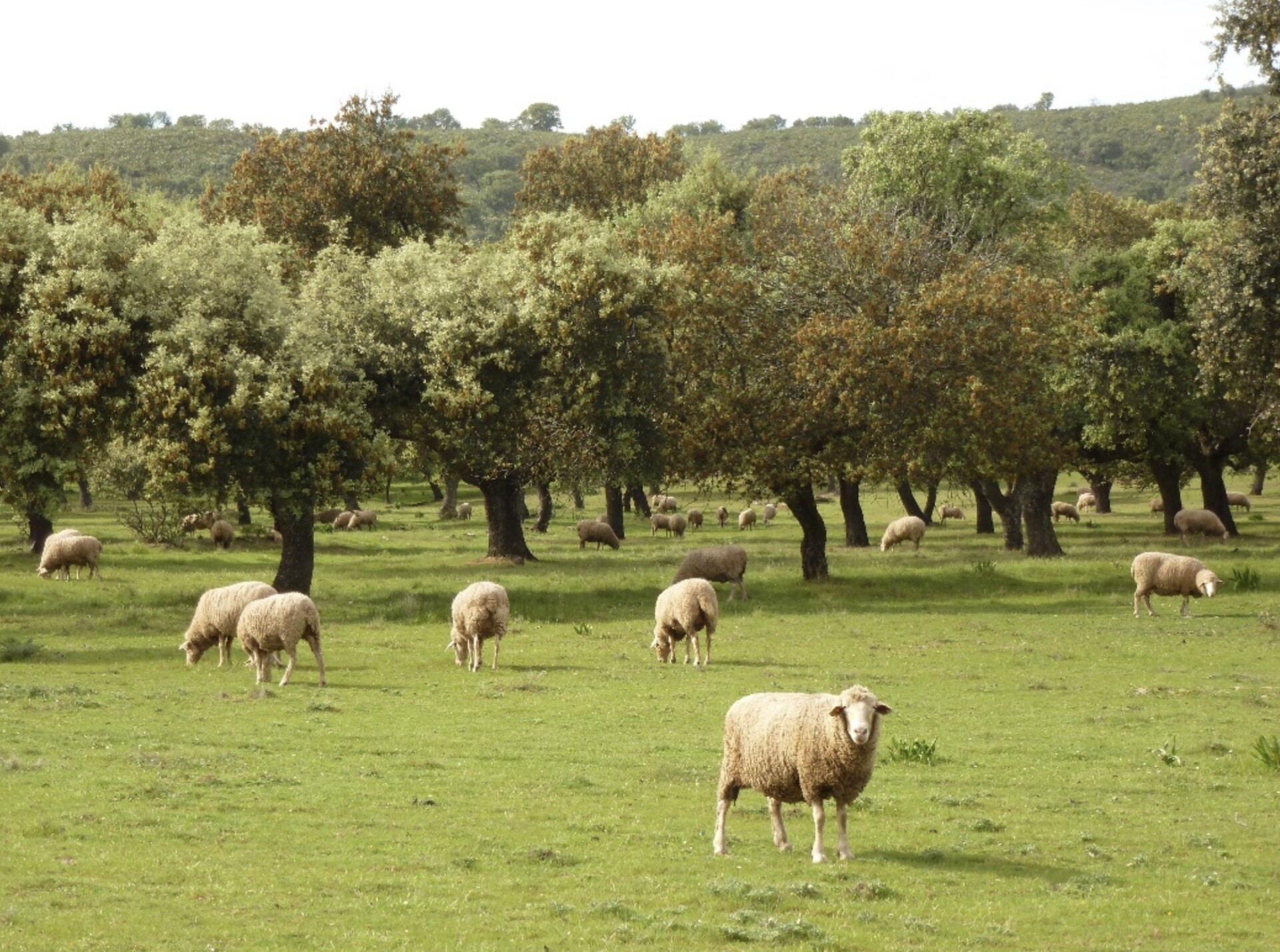
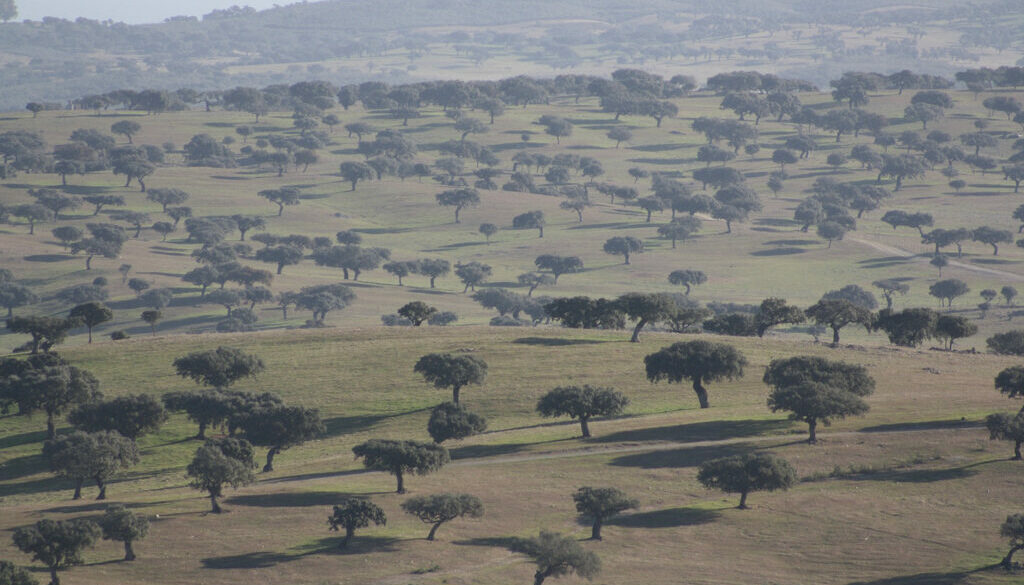
A typical dehesa with holm oak and sheep in Abadía, Cáceres. By M. Bertomeu.
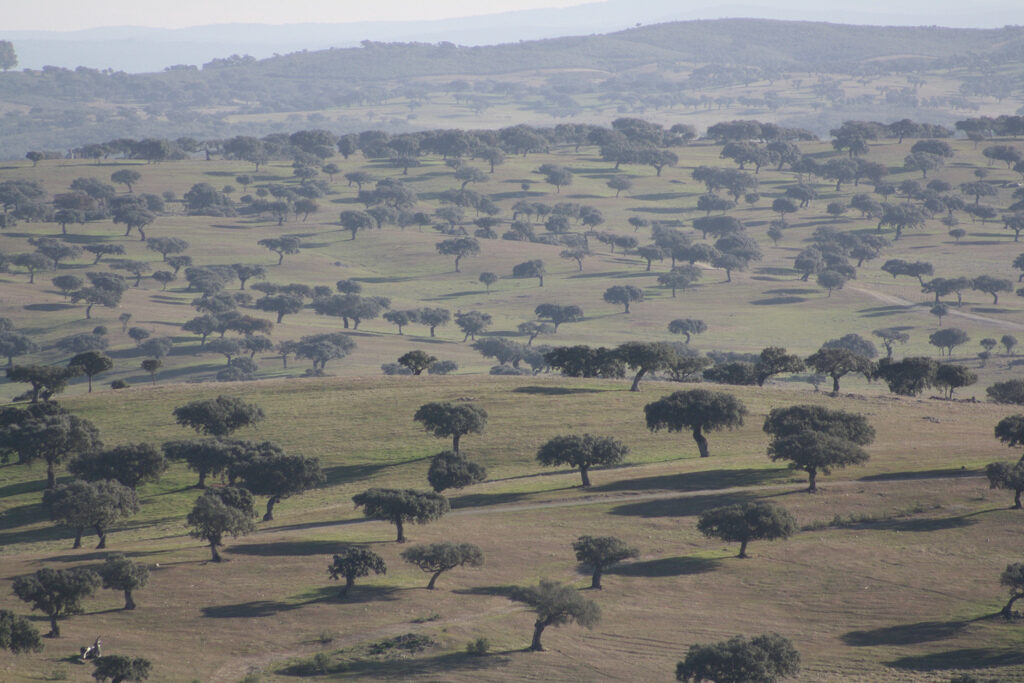
Montado, SouthEast Portugal (1) by Palma, João HN (2014). Full resolution and source to cite: https://www.doi.org/10.5281/zenodo.17414090
Carbon Farming MED – bridging research with policy
EURAF, alongside its partners in the Interreg Euro-MED Programme funded project Carbon Farming MED, has been providing expert technical guidance for the development of CRCF methodologies. This project promotes carbon farming practices that sequester carbon and open new income opportunities for farmers, effectively translating scientific research and field practice into concrete policy recommendations.
This work is conducted through pilot farms that act as living laboratories, generating real-world evidence on regenerative practices adapted to Mediterranean climates, soils and farming traditions. These results are feeding directly into policy guidance, including the project’s first policy briefing on agroforestry, which highlights its capacity to deliver carbon storage alongside biodiversity and ecosystem benefits.
Building on this evidence, the consortium is developing an IT platform designed to act as a central hub for data, knowledge exchange and market access. The platform will support the creation of a Mediterranean carbon credit market by enabling the calculation of greenhouse gas emissions and carbon sequestration at farm and plot level.
Carlos Alberto, Coordinator of the Carbon Farming MED project, said:
“The real strength of the platform lies in making carbon farming both accessible and rewarding. It allows farmers to manage data from one or multiple plots, estimate carbon credits generated through improved practices, and engage more effectively with the voluntary carbon market.”
ENDS
Notes to editors:
- EURAF policy briefing 20 – link
- EURAF policy briefing 27 – link
- EURAF policy briefing list – link
- More about Carbon Farming MED project – link.
- Carbon Farming MED project IT platform screenshots – link.
- More about benefits of agroforestry – link.
- More about EURAF and our work – link.
- Pictures of European agroforestry – link.