Switzerland
AGROFORESTRY SYSTEMS in SWITZERLAND
Switzerland has a long history of agroforestry, with traditional systems including fruit orchards, wooded pastures, and chestnut selva. In 1951, an official count revealed that there were over 16 million standard fruit trees in Switzerland. However, by 1975, this number had significantly decreased. Today, they cover around 8% of Swiss agricultural land. As these systems were grazed, they are mostly silvopastoral systems.
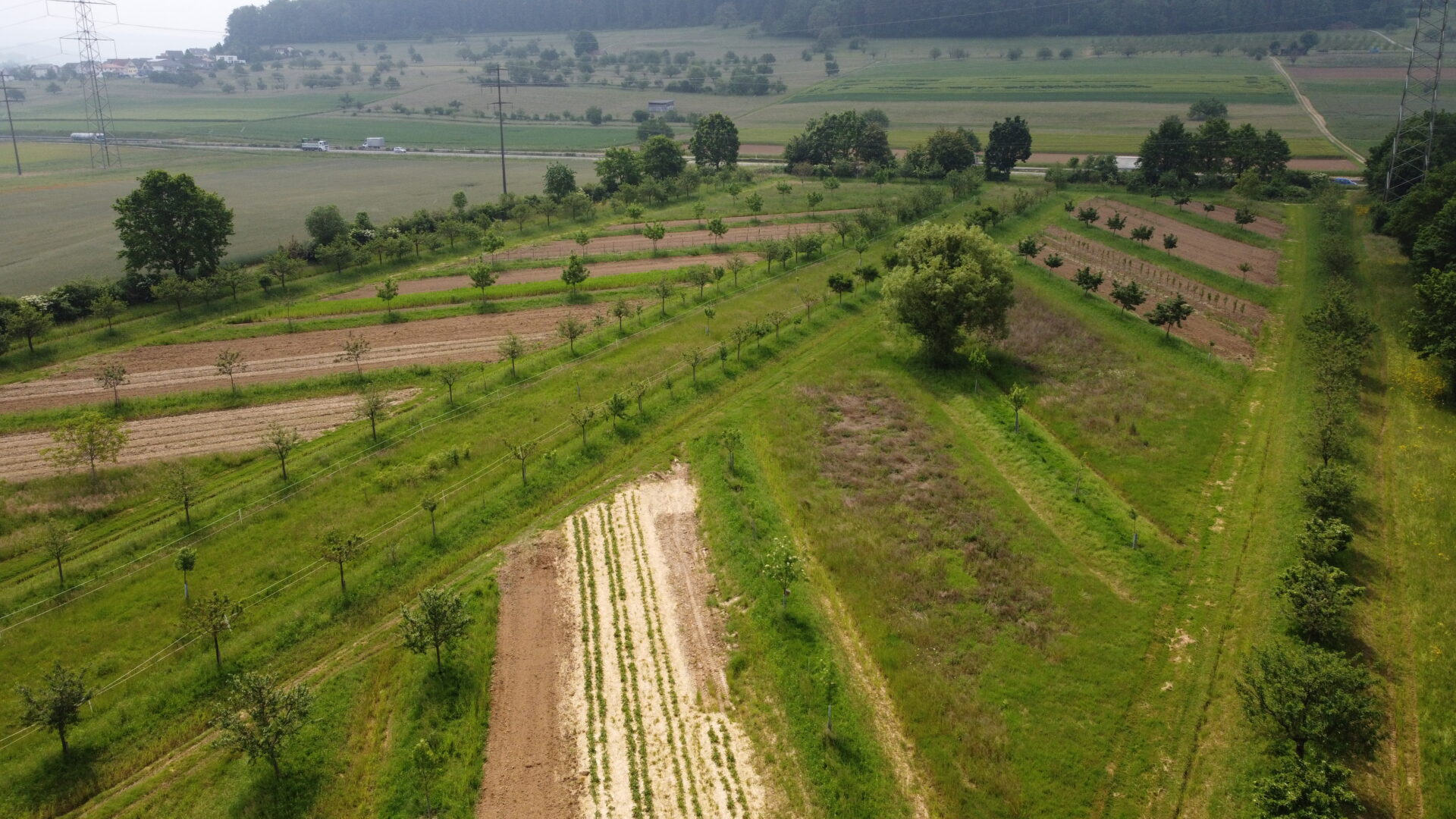
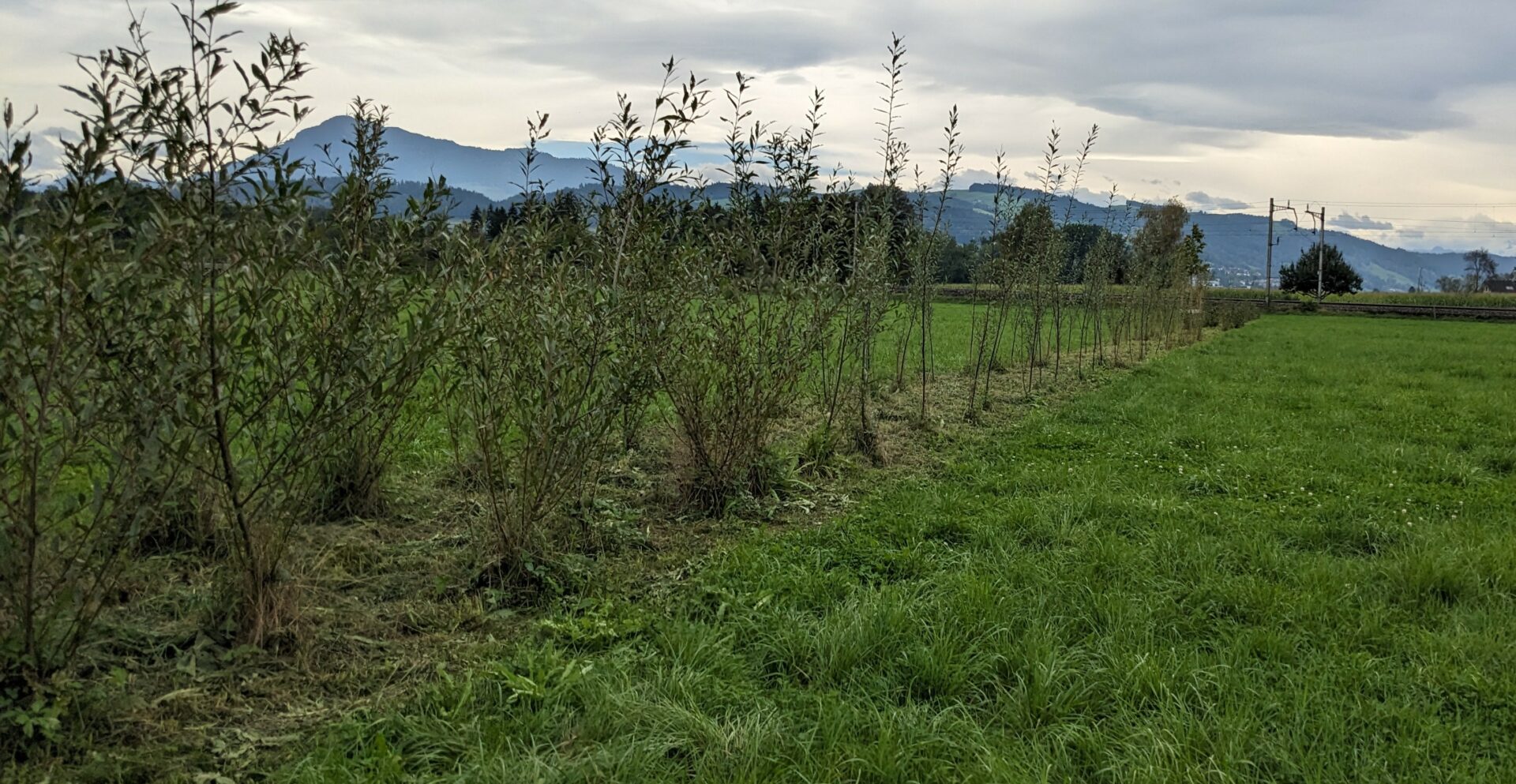
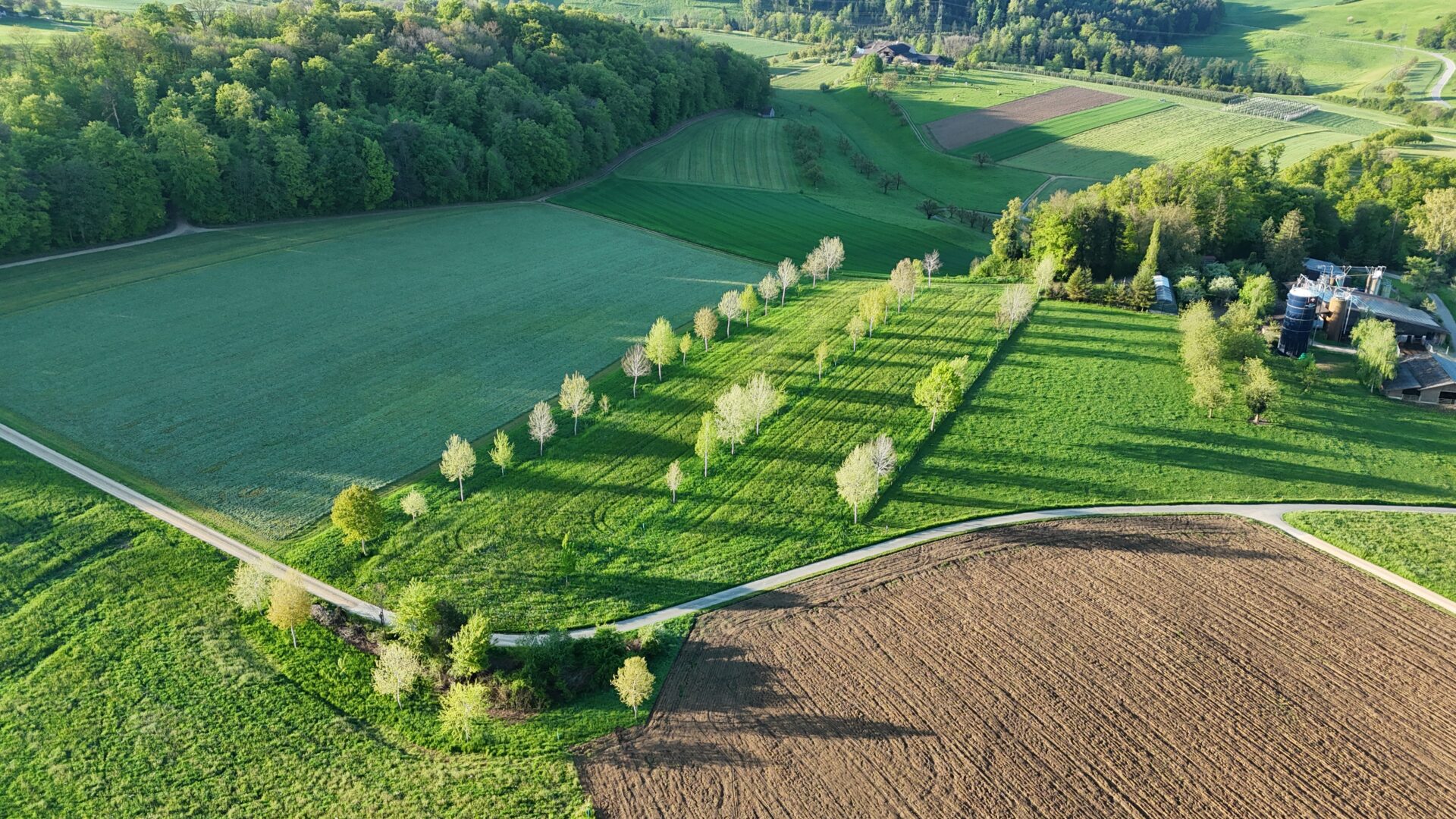
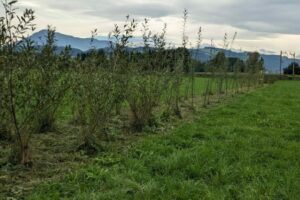
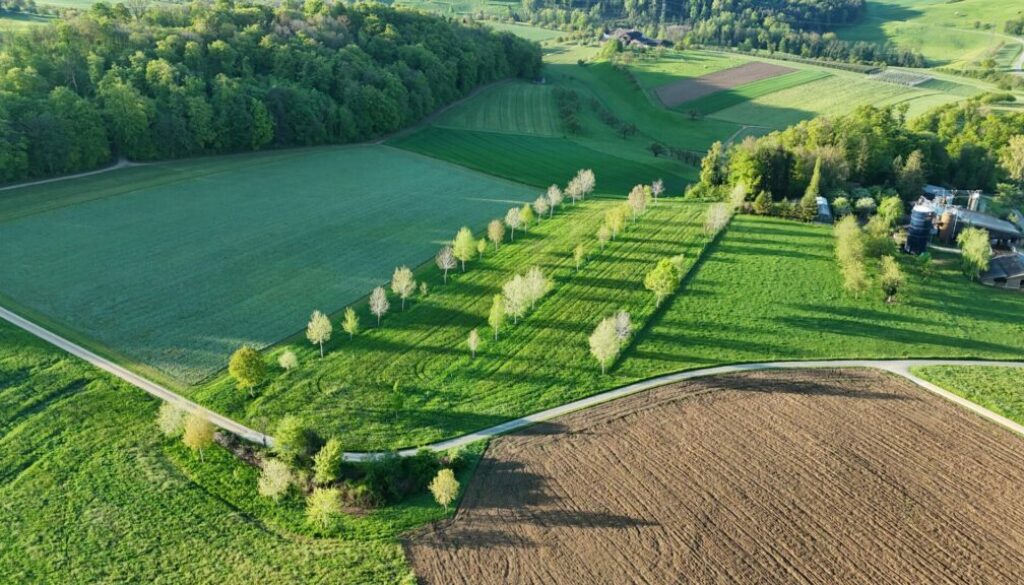
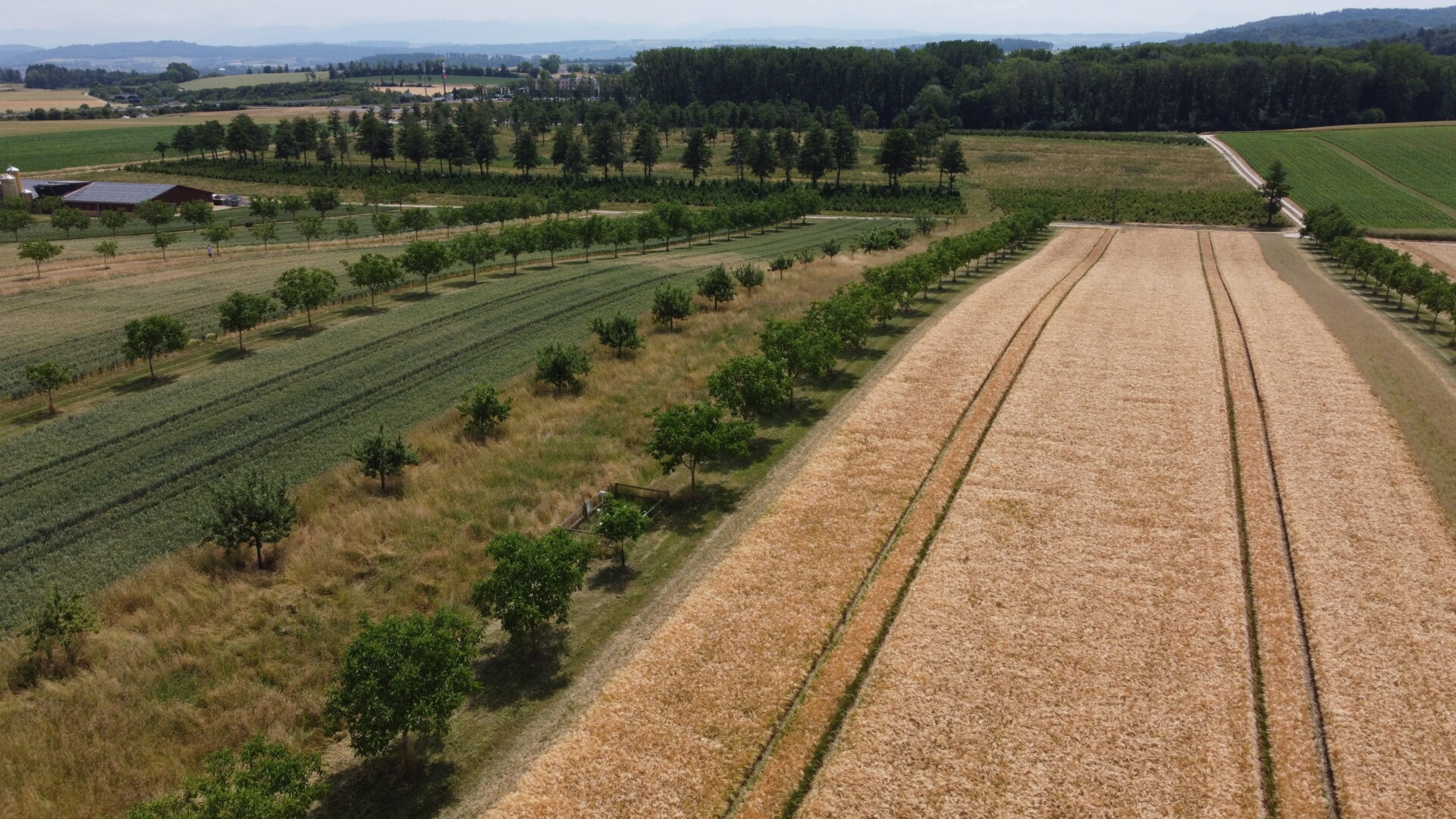
However, in the early 2010s, pioneering farmers started reintroducing high-stem trees into – mainly – arable fields to combat erosion. These silvoarable systems which often include fruit and wild fruit trees (due to Swiss agricultural funding schemes), were primarily intended for fruit and wood production. In recent years, more and more fodder hedges have been established. The animals either graze directly on them or the hedges are cut and the material is used to feed them in the barn.
Nowadays, Switzerland has traditional agroforestry systems still on 8% of its farmland. In addition, around 800 ha of modern agroforestry systems exist, including: alley cropping systems and keyline agroforestry systems with fruit trees and shrubs, or timber trees widely spaced on arable land, as well as fodder hedges for feeding livestock and mixed multifunctional systems such as permaculture, forest gardens and syntropic agroforestry.
PEOPLE in AGROFORESTRY
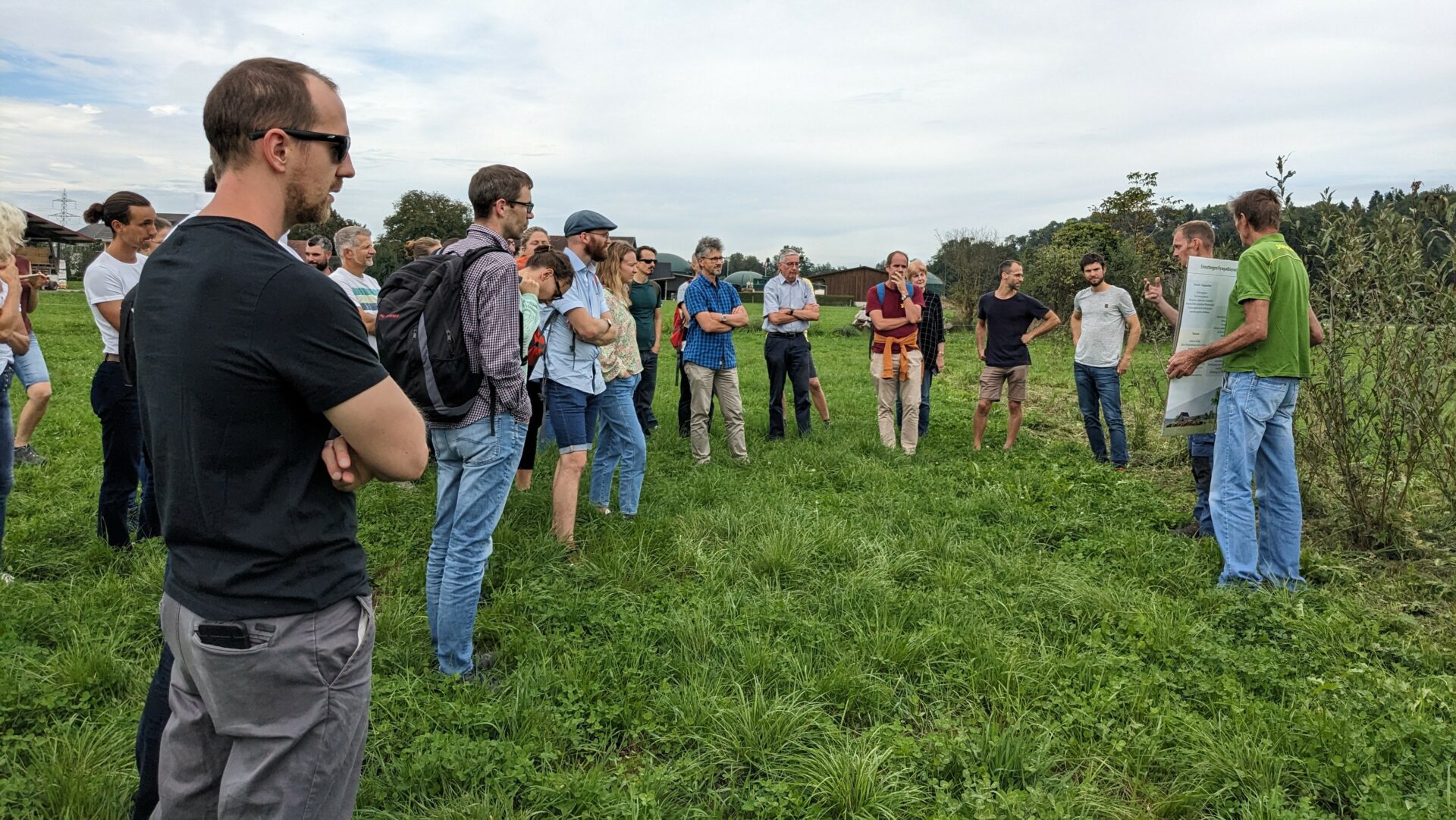
The Interessengemeinschaft IG Agroforst (Interest Group Agroforestry) was launched in the German-speaking part of Switzerland in 2011, followed by the Plateforme Agroforesterie Romande in the French-speaking part in 2017. These exchange platforms have members from various backgrounds, including those working in practice, consultancy, research and administration. In 2026, both interest groups were transformed into the Verein Agroforst Schweiz / l’Association suisse d’agroforesterie (Swiss Agroforestry Association) in order to establish a legal basis. Various activities take place such as field tours, courses, annual conferences and regular newsletters. There are also working groups on agroforestry and peer-to-peer services in which farms provide advice and support to other interested farms.
AGROFORESTRY POLICIES in SWITZERLAND
Agroforestry systems are not eligible for payments under the Swiss agricultural direct payment schemes. However, the political framework allows for its implementation. Support is only provided for nut and fruit trees through Biodiversity Promotion Areas and Landscape Quality Payments, though. This makes the prospect of agroforestry with other tree species less appealing. In addition to direct federal payments, initiatives from cantons, private enterprises and foundations are encouraging the establishment of agroforestry systems as part of their voluntary climate protection measures.
The Swiss Agriculture and Food Climate Strategy 2050 also recognises the potential of agroforestry to act as a carbon sink and includes a measure called ‘Agroforestry’ in its catalogue. In addition, the future role of traditional and modern agroforestry systems in agricultural policy is the subject of lively debate, particularly with regard to support, monitoring and administrative handling.
Several agroforestry projects have been launched in Switzerland in recent years. Please visit our national website for updates. www.agroforst.ch / www.agroforesterie.ch
TAKE A LOOK AT AGROFORESTRY in SWITZERLAND