France
The Situation of Agroforestry in France
Hedgerows: France’s Main Form of Agroforestry
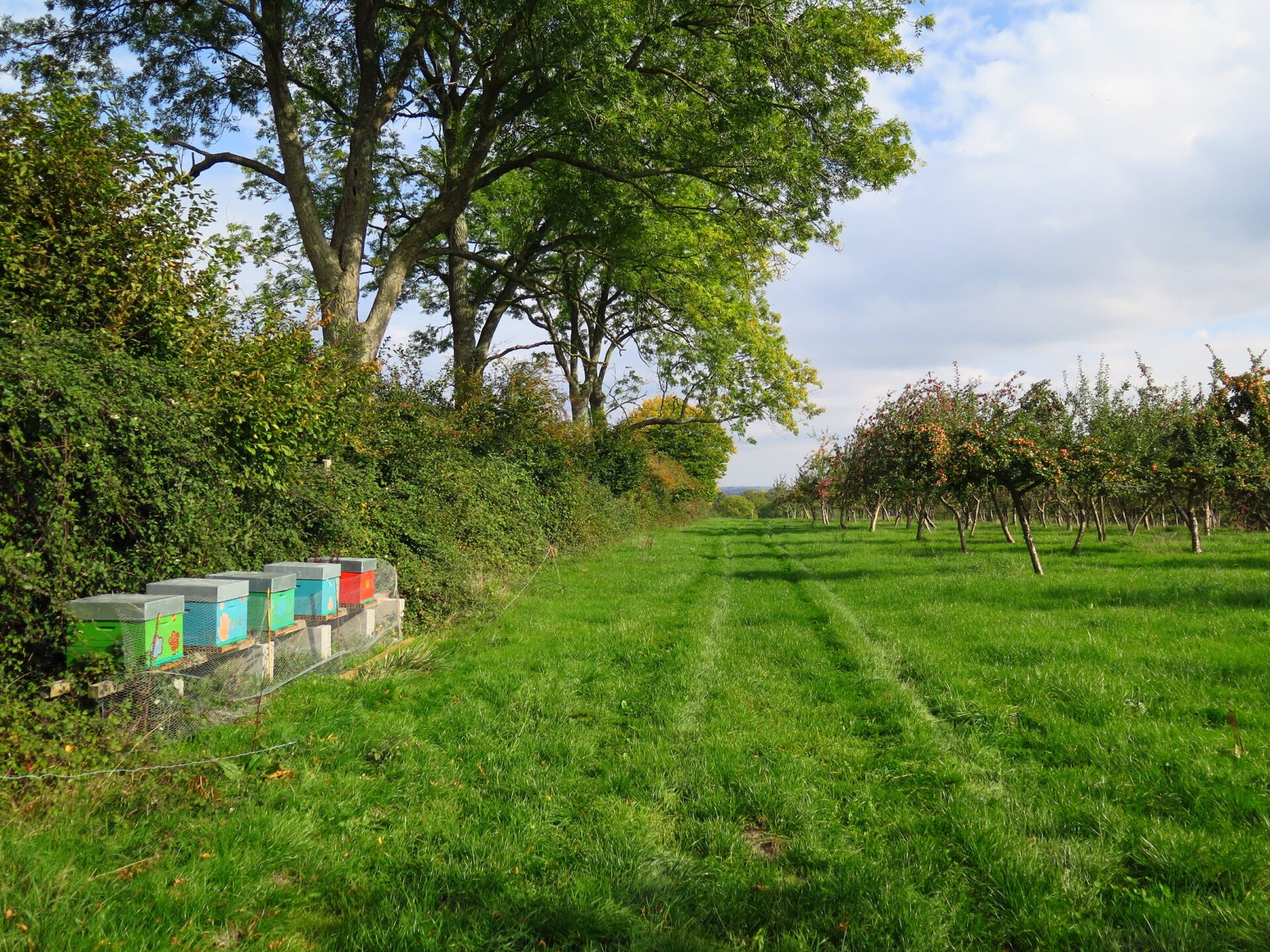
In France, hedgerows are the main form of agroforestry. Estimates from the National Geographic Institute suggest that the country had about 1.55 million kilometers of hedgerows in 2023.
Some agroforestry practices are specific to certain regions: for example, in the Auvergne-Rhône-Alpes region, chestnut trees are often found on sheep farms in Ardèche, as well as bocage landscapes in the Allier and Ain departments. Normandy, Lorraine, Alsace, and the Pays de la Loire together account for around 100,000 hectares of meadow orchards (apple, pear, cherry, and mirabelle plum trees).
Innovations in intra-plot tree alignment practices are also promising, although no quantitative data is yet available to assess their extent.
Hedgerows: A Historical and Ecological Heritage in Decline
Hedgerows in France represent a historical and ecological heritage, but one that continues to decline. Overall, France has lost about 70% of its hedgerows since 1950, and official figures reported a loss of 23 500km of hedges each year over the 2017-2021 period.
This decline has accompanied the agricultural land reallotment (since the 1960s), the impoverishment of livestock farms, and the decrease in the number of farmers to the benefit of farm expansion. It is also largely the result of the Common Agricultural Policy (CAP) that was unfavourable to hedgerows until around 2010.
Finally, it is also caused by the degradation of hedgerows: today, around 80% of the existing hedgerow network is considered degraded, mainly due to aging trees and inadequate management practices. The most common maintenance techniques involve cutting back hedgerows laterally and sometimes also in height—creating and maintaining narrow hedges. These practices weaken the trees, reduce the ecosystem services provided by hedgerows, and ultimately leads to the complete loss of tree cover.
Public Policies Supporting Hedgerow implantation and Restoration
Since the 2000s, however, new public policies have been introduced to support hedgerow planting and protect existing networks.
The 2020s have also seen the rise of the concept of sustainable hedgerow management, aimed at addressing the decline in hedgerow quality and restoring their ecological integrity.
In the current Common Agricultural Policy (CAP), France introduced, within its National Strategic Plan, a Hedgerow Bonus (“Bonus Haie”) to support sustainable hedgerow management, as part of the eco-scheme
In 2023, the French government launched the Pact for Hedgerows (Pacte en faveur de la haie), a comprehensive national policy designed to strengthen support for hedgerows across the entire value chain — from seed and plant production, through planting and management, to the valorization of hedgerow wood.
The Pact sets out quantified targets, which have been incorporated into the Agricultural Orientation Law (Loi d’orientation agricole):
| Objective | 2030 | 2050 |
| Length of sustainably managed hedgerows | 100,000km | 500,000 km |
| Net gain in hedgerow length | 50,000km | |
| Annual mobilization of dry matter from sustainably managed hedgerows | 500,000t | 70% of dry matter from hedgerows to come from sustainably managed sources |
In addition, several ambitious regional programs support hedgerow planting—such as “Breizh Bocage” in Brittany and initiatives in the Grand Est region.
French Agroforestry Association (AFAF)
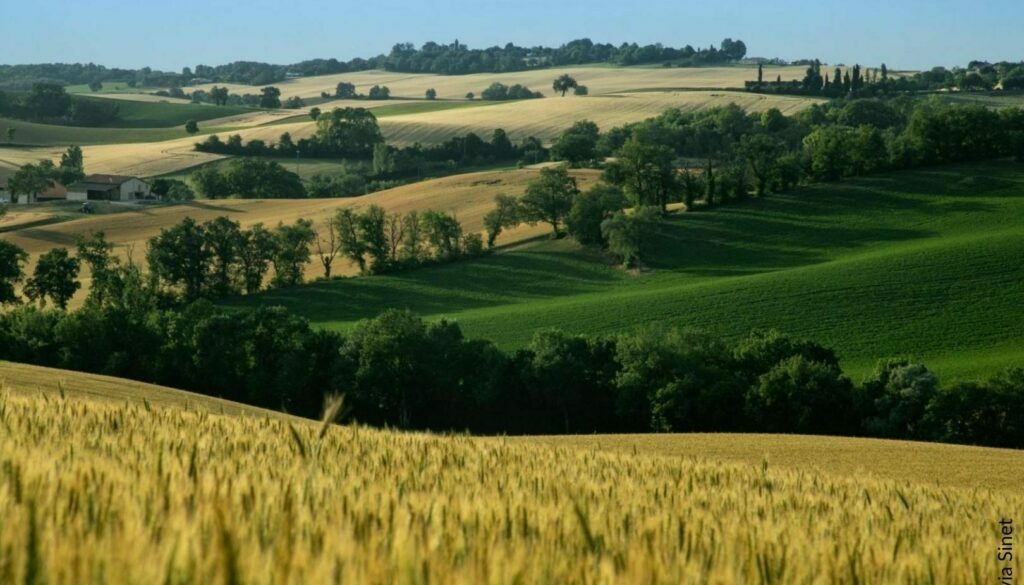
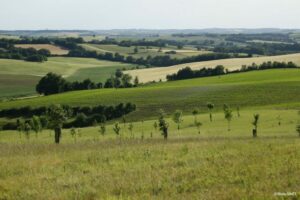
France is 53% agricultural land. However, it is a highly diverse country, with soil and climate conditions that vary greatly from region to region. Thanks to this diversity, France boasts a wide range of agroforestry practices in both temperate and tropical regions. A variety of agroforestry systems can be found, particularly those used in livestock farming.
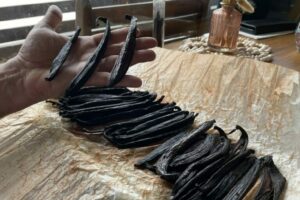
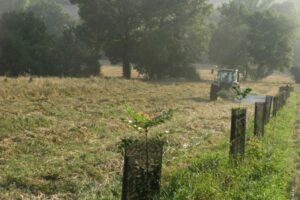
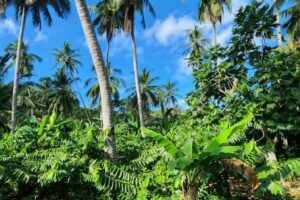
These include silvopastoral practices, agroforestry poultry ranges, and grazed orchards. Agroforestry is also developing within arable farming, orchard-market gardening systems and vitiforestry, the latter of which involves the gradual reintegration of trees into vineyards. In overseas territories, forest gardens and crops grown under forest cover can also be found.
Since 2007, the French Agroforestry Association (Accueil – Agroforesterie Association Française) has been working to accelerate the country’s agroecological transition. To achieve our goals, we undertake a wide variety of activities:
- Research and development
- Training and education
- Network facilitation
- Development of sustainable market channels
- Representation in public debates.
The French Agroforestry Association collaborates with over 150 French and European partners to address current agricultural challenges through an integrated and collective approach.
We support farmers as they transition towards agroecological practices. We collaborate with research and agricultural education institutions to accelerate innovation and with technical operators to implement development programmes at various scales. At the same time, we engage with public institutions to promote the adoption of all forms of agroforestry.
Our missions:
- Build strong partnerships to accelerate the transition.
- Share knowledge with farmers and technicians.
- Promote the adoption of agroforestry practices on farms and in territories.
- Engage citizens in shaping a sustainable future.
Preparing for Tomorrow: Training Agroforestry Technicians
In 2022, the French Agroforestry Association launched the ‘Specialised Agroforestry Technician’ programme in response to the urgent need for technicians who are ready to work in the field.
The programme aims to train operational agroforestry facilitators and technicians, strengthening the existing network and accelerating the transition to agroforestry across all French territories.
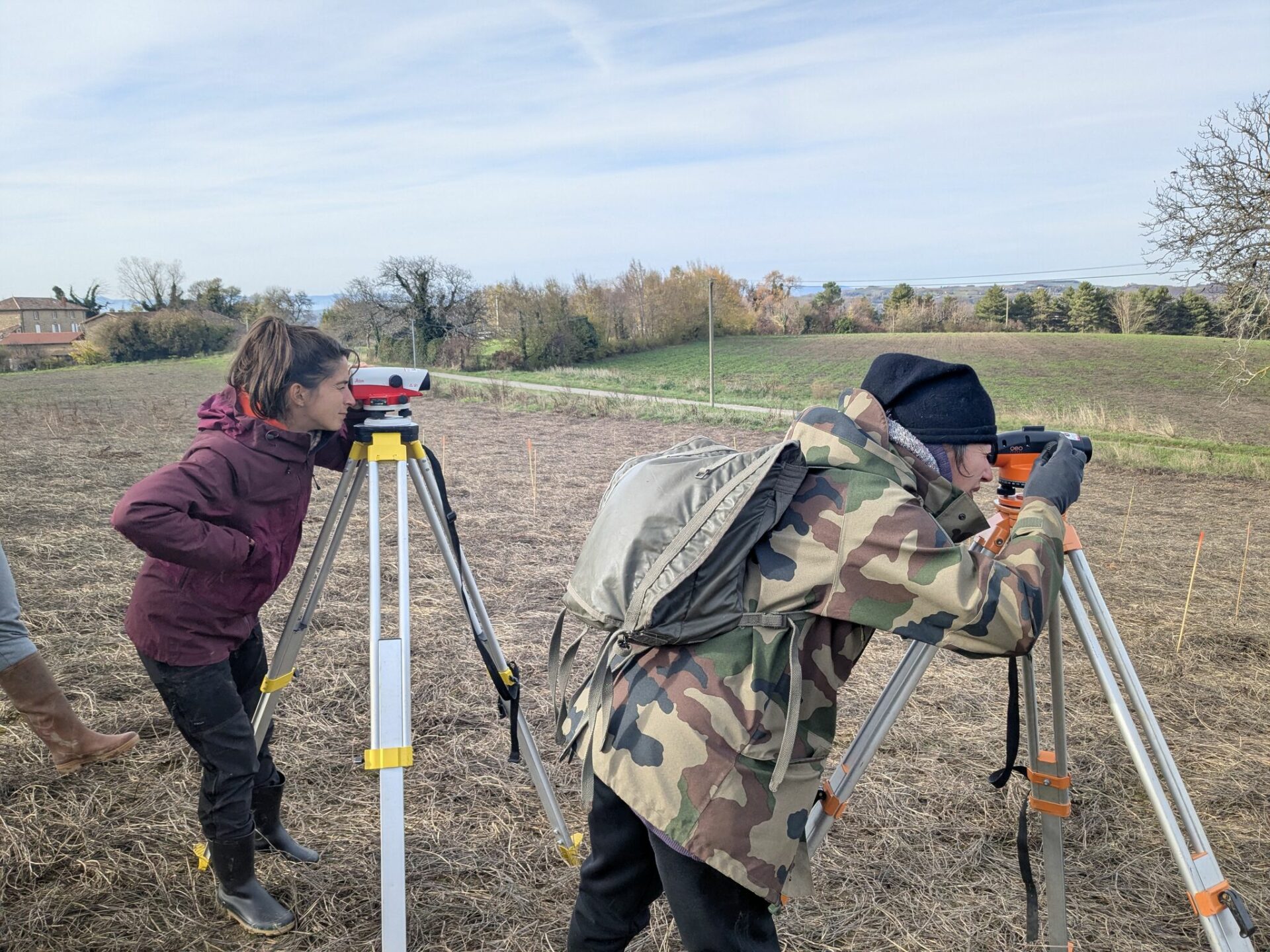
The ‘Specialised Agroforestry Technician’ programme is an itinerant training course that introduces participants to the people who make agroforestry a reality. Spanning ten months, it is divided into four main modules, hosted in ten different regions. Learners benefit from one week of training per month, with each session focusing on a different theme.
The third cohort of the programme will travel across France in the 2025–26 academic year.
Réseau Haies France
A national network of hedgerow stakeholders.
Réseau Haies France brings together 70–80% of all stakeholders involved in trees and hedgerows. It stems from pioneering organisations that have been working on tree and hedgerow issues for over 40 years, and it was established as a national association in 2007.
Its purpose is to promote, support and implement comprehensive strategies for the development of trees and hedgerows across France.
Réseau Haies France now unites more than 450 member organisations that work in complementary ways.
- Organisations specialising in trees, hedgerows and landscapes (associations, companies, nurseries, wood-energy cooperatives, etc.).
- Agricultural bodies (Chambers of Agriculture, farmer groups, cooperatives, etc.).
- Local authorities (community councils, regional and natural parks, watershed syndicates, etc.).
- Environmental organisations (environmental NGOs, hunters’ federations, etc.).
From Seeds to Wood: Building Sustainable Value Chains
The network works on a wide range of topics, including the production of reproductive materials for trees and shrubs, hedgerow planting, sustainable management and the utilisation of wood derived from hedgerows.
The network’s goal is to help build sustainable economic models that recognise the value of hedgerows for farmers and rural areas, while ensuring their conservation and ecological quality.
Knowledge, Technical Support, and Policy Advocacy
The network’s missions include developing technical resources and reference materials for its members, supporting the structuring of sustainable value chains from upstream to downstream, and advocating for public policies that recognise and strengthen the role of hedgerows.
Labels and quality initiatives
Réseau Haies France manages the “Label Haie“, which guarantees the sustainable management, ethical utilisation, and fair distribution of hedgerow products. This label is officially recognised within public policy frameworks, particularly under the Common Agricultural Policy (CAP).
The association also co-manages the “Végétal local” quality label, created by the French Biodiversity Agency (OFB), which certifies the wild and local origin of plant material, ensuring its suitability for the restoration of natural and semi-natural habitats, such as hedgerows.