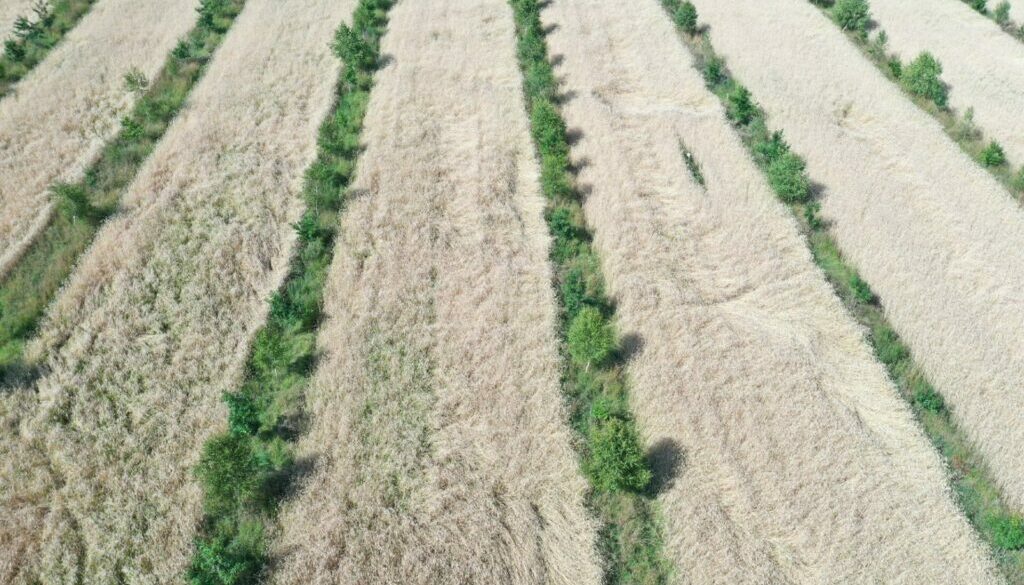
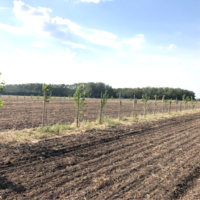
Figure 1. Agroforestry system at experimental station LFS Grottenhof / Thal-Hardt, Styria © LFS Grottenhof / Thal-Hardt, J. Schantl
Austria
Austrian Association of Agroforestry – ARGE AGROFORST
The Austrian association of agroforestry (ARGE Agroforst) was founded in 2020 by a group of agroforestry enthusiasts, farmers and scientists. As a registered non-governmental NGO the ARGE Agroforst commits to expand the agroforestry system for the benefit of the general public, thereby providing farmers and foresters in Europe, and especially in Austria, with the basis for a further economic foothold on arable and grassland as well as in forests.
The main activities are:
- building and expanding bridges to political decision-makers.
- developing the world’s first certificate for agroforestry farming (PAN is a registered trademark within the EU) and handling the certification process with the farmers.
- integrate all formats of agroforestry into agricultural practice in Austria.
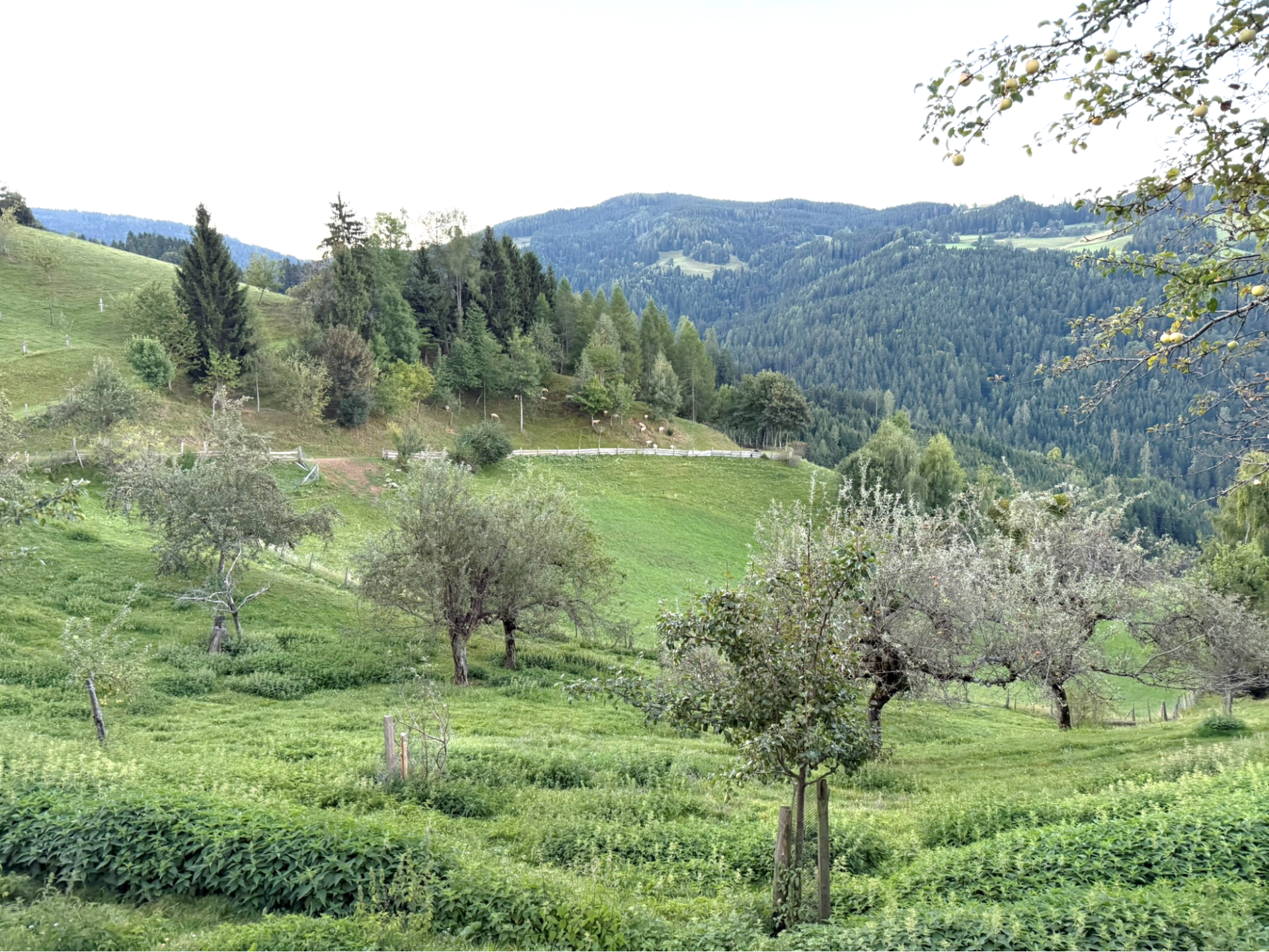
Agroforestry systems in Austria
Traditional agroforestry systems
Windbreak Hedges (soil protection measures)
What are soil protection measures and what effects do they have? Soil protection measures are strips of land in our cultivated landscape planted with native trees and/or shrubs. They serve agriculture by:
- slowing soil erosion caused by wind and water,
- providing a near-natural habitat for native flora and fauna,
- improving the microclimate by reducing wind speed and temperature,
- providing the population with a diverse landscape,
- connecting existing biotopes, and protecting the climate.
In accordance with their primary goal of wind reduction, they were formerly called windbreaks. Today, they are referred to as soil protection measures, multi-purpose hedges, tree-shrub hedges, and generally as landscape features, depending on their function, structure, or location.
Source: “Bodenschutzanlagen (Windschutzhecken, Mehrnutzenhecken).” Land Niederösterreich
Orchard Meadows (“Streuobstwiesen”)
Orchard meadows consist of various fruit trees trained in a classic, large-crowned form and growing freely without permanent support. A fruit tree is defined as any woody plant that bears edible or processable fruit on naturally trained crowns; that is, training and pruning measures are based on the natural forms of the different woody plants. Essential characteristics, to varying degrees, include a high diversity of fruit species and varieties, different trunk heights and growth forms, as well as different age classes within the orchard. The distribution of fruit species and varieties is typical for the region. Orchard trees can be found, among other places, as fruit trees on grassland (orchard meadows), in gardens, on arable land, in vineyards, as rows of trees and avenues, as house and farmyard trees, and as individual trees in the landscape.
Care and Management: Orchards are managed in an environmentally friendly, extensive, and site-appropriate manner. This requires a sustainable strategy for tree care, underutilization, harvesting and fertilization, as well as plant protection. Chemical-synthetic pesticides and fertilizers are generally not used.
Source: Was Ist Streuobst?
Woodland Pastures (“Hutewälder”)
A wood-pasture is a thinned-out forest used as pasture for livestock – instead of the costly clearing and creation of grassland.
In this form of land use, also known as forest grazing, livestock are driven into the forest to forage. Acorns and beechnuts, as well as leaves and twigs of young trees, are particularly nutritious. Depending on the number of grazing animals, this browsing reduces the natural regeneration of trees, but allows more light to reach the fruit-bearing mature trees. This predominant historical use of the forest, common from the beginning of the European Neolithic period through the Middle Ages, resulted in light to almost open, park-like woodlands and eventually wooded pastures, which were formerly collectively referred to as wood-pastures. Wood-pastures and wood-pastures are therefore ancient cultural landscapes and not natural landscapes…
Modern Agroforestry
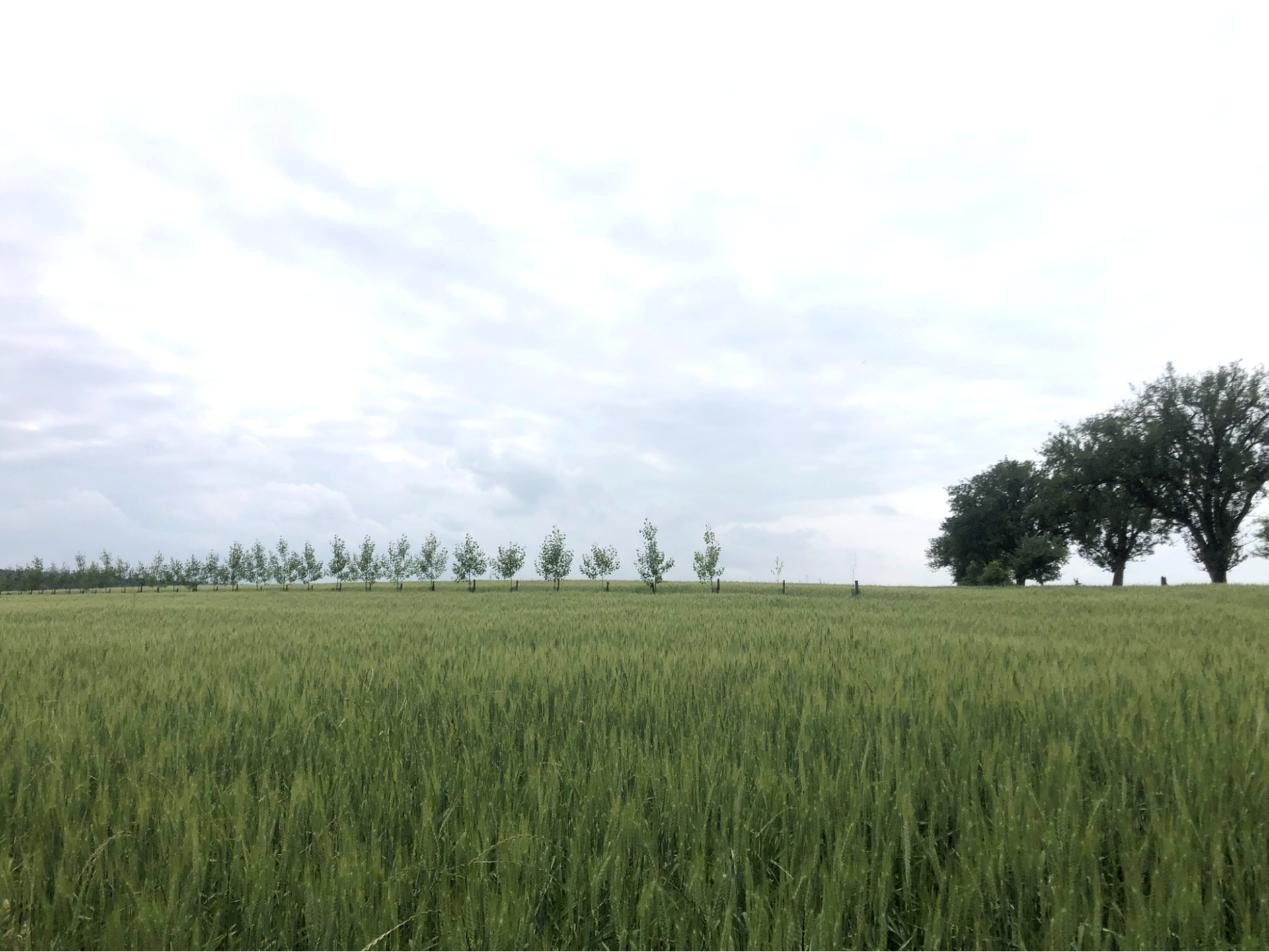
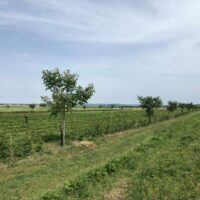
As part of all agroforestry projects at FiBL, 55 farms with agroforestry systems were recorded (status in 03/2025), most of which are located in the federal states of Lower Austria, Upper Austria, and Styria. The systems include short rotation coppice strips, valuable timber systems with 2–12 tree species, fruit systems with one or more fruit species and high to low variety diversity, and a wide range of mixed systems (either in rows or single-species rows and different rows). The total agroforestry area in the database is around 300 hectares (total arable land in Austria: 1.33 million ha). There has been a significant increase in newly established AFS in recent years, with a particular increase noticeable since 2020. The average number of trees per farm is over 200.
Agroforestry farms in Austria show a wide variety of systems that differ in design, use, and management. It is therefore to be expected that the ecological impact will vary. The survey certainly did not cover all AFS in Austria; silvopastoral systems in particular are underrepresented. In addition, an increase in AF farms is expected from 2025 onwards due to the new “agroforestry strips” measure in the ÖPUL support program. The survey and the expansion of the national agroforestry map can be continued.
Agroforestry Policies in austria
–Forestry Act 1975 §1a (5) Amendment
(5) Areas managed under short-rotation coppice with a rotation period of up to 30 years, as well as forest nurseries, forest seed orchards, Christmas tree plantations, and agroforestry areas such as multi-purpose hedges or plantations of woody plants for the purpose of obtaining fruits such as walnut or sweet chestnut, are not considered forests within the meaning of paragraph 1, provided they are not established on forest soil and their owners have notified the authority of the intended form of operation within 10 years of the afforestation or establishment of these facilities. If such notification is not made, section 4 applies.
–GAP mid term modification ÖPUL “Agroforststreifen” of arable fields (ÖPUL 20231 C Non-productive arable land and agroforestry strips)
Agroforestry strips are newly established elements directly adjacent to arable land, created from 2020 onwards, and planted with woody plants (excluding those on the negative list). Agroforestry strips must have an average width of at least 2 m and a maximum of 10 m, and be planted with a density of at least 10 and a maximum of 25 trees per 100 linear meters, with a maximum tree spacing of 15 m. The agroforestry strip must not correspond to any special crop as defined in Section 25 Paragraph 4 of the GSP-AV (German Ordinance on the Protection of Agriculture). Planting shrubs between the trees is permitted.
EURAF delegates
Johannes Schantl: [email protected]
Theresia Markut: [email protected]
Other Sources: ARGE Agroforst ; Agroforst – FiBL Österreich