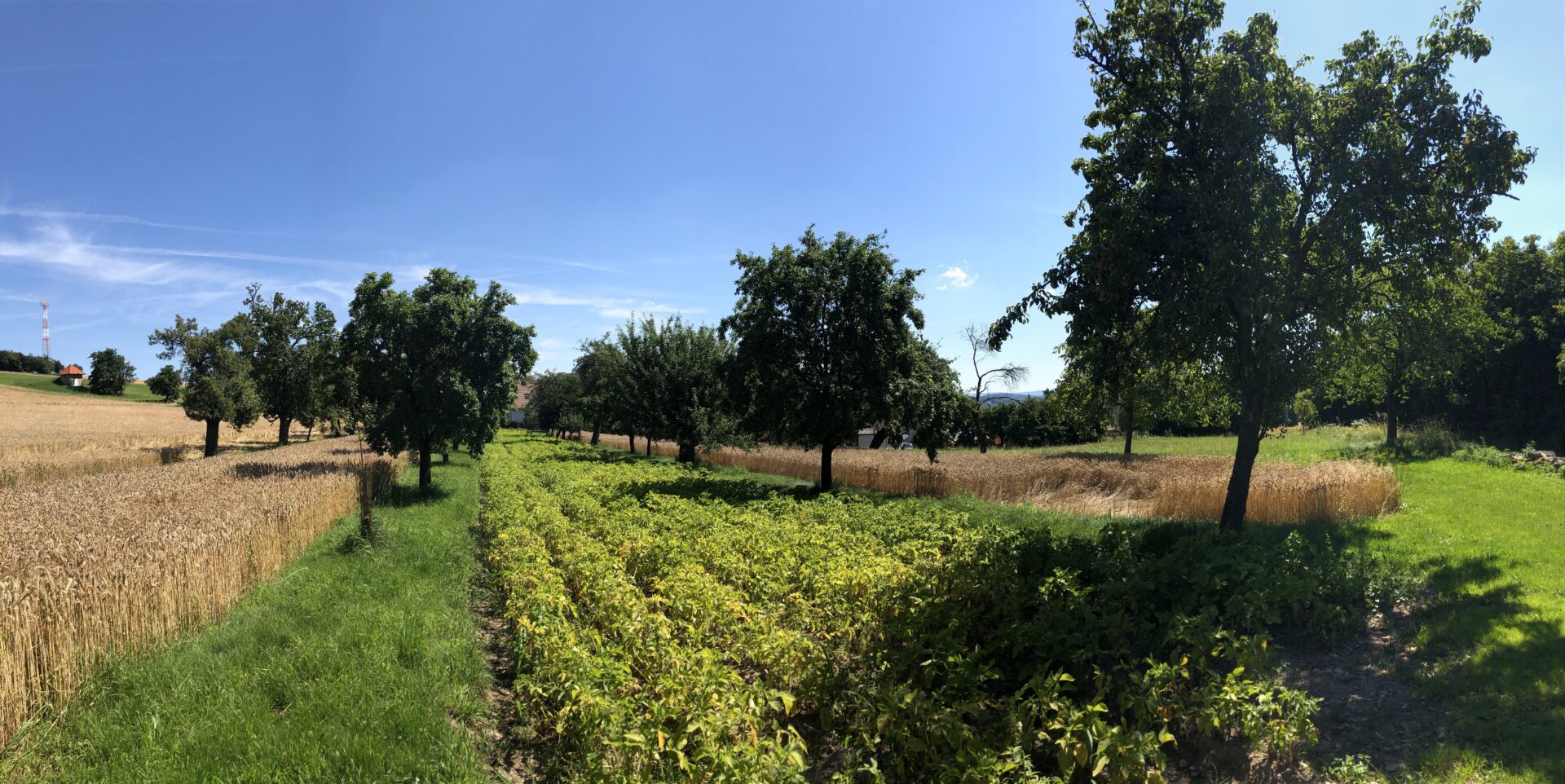
Traditional field orchard © ČSAL
Czech Republic
From history to current state
The current state of the agricultural landscape of the Czech Republic is heavily influenced by the process of collectivization, which occurred in the mid-20th century under the communist regime, leading to the nationalization of about 95% of farms and shifting agriculture from small-scale family farms to large agricultural cooperatives. Such a transition resulted in widespread land consolidation, turning fragmented and mosaic landscapes into large, homogenized agricultural blocks. Consequently, agroforestry systems, which in their various forms have historically been an integral part of the landscape across the entire Czech Republic, now occupy only a small fraction of the country’s territory.
Still, remnants of traditional agroforestry are present across the country. Grazed orchards can primarily be found in foothill and mountain areas with less fertile soils, with particularly high concentrations still existing in the region of the White Carpathian mountains along the borders with Slovakia. Among those still abundant are also linear systems on the edges of agricultural fields, such as tree avenues along roadways, windbreaks, and shelterbelts. However, by far the most common and still very popular systems across the whole country are home gardens, which combine fruit and vegetable production, often with the raising of domesticated animals primarily for household consumption.
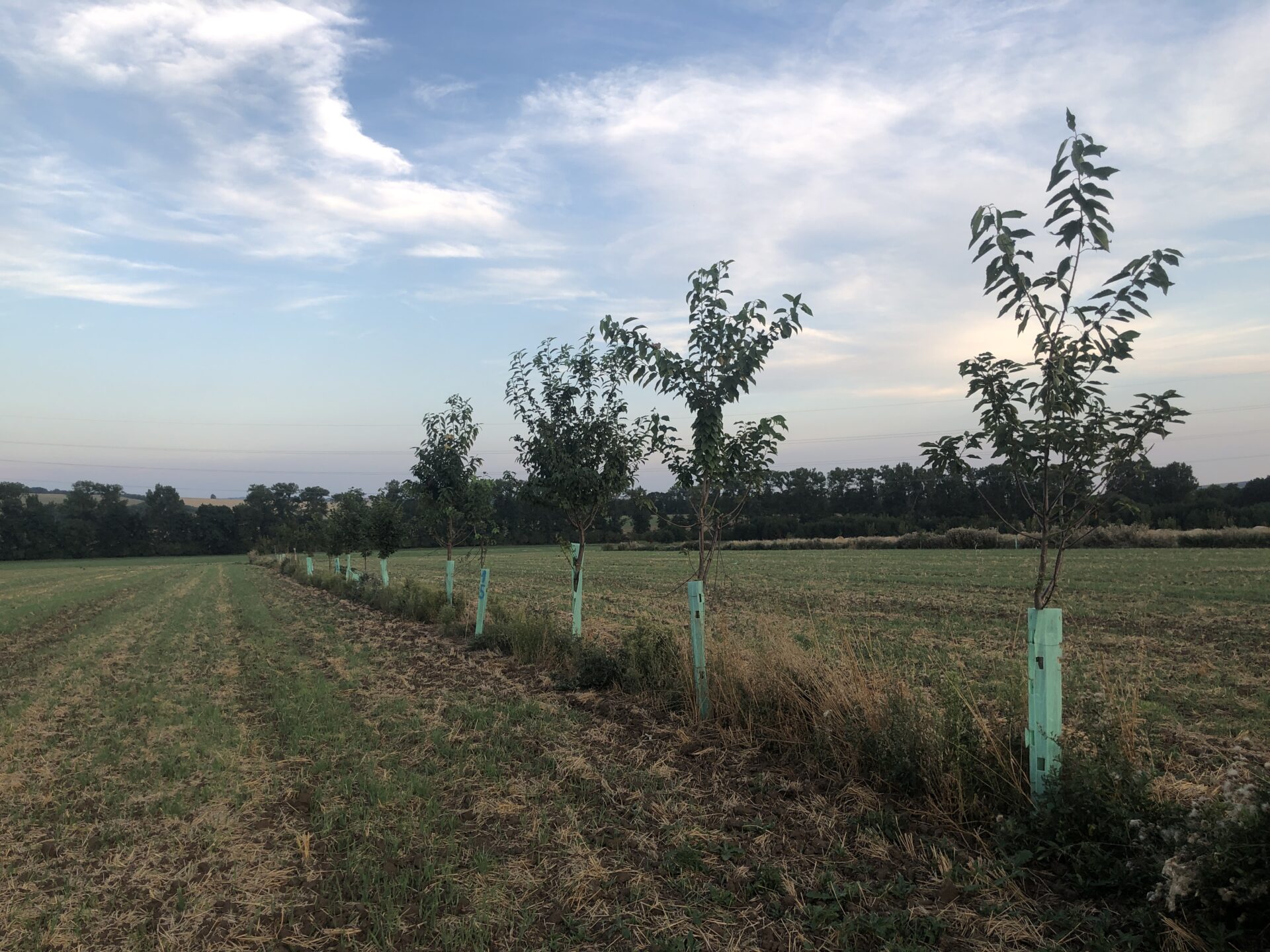
Newly established silvoarable system in accordance with agroforestry subsidy requirements © ČSAL
Barriers for Modern Agroforestry
Nevertheless, if taking into account that the Czech Republic has by far the biggest average sizes of farms within the EU and considering the fact that Czech agriculture is among the most intensive, the greatest potential lies in applying modern and innovative linear systems inside the agricultural field parcels, which allow farmers to fragment extensive and uniform soil blocks without restricting their use of heavy agricultural machinery and overall practices to which they are accustomed. Yet, while the Czech agricultural landscape is dominated by large fields, these are often owned by a high number of small owners who lease their land to large agricultural companies. These often don’t feel the necessity to shift these lands to more sustainable agroecosystems. Contrary, those that do have such interest often face a number of barriers resulting from the aim to establish agroforestry systems on land which is not directly owned by them.
Support, Policy, and Future Outlook
Although agroforestry today still represents only a minor portion of agricultural lands in the Czech Republic, thanks to long-term research demonstrating the potential of agroforestry as an ecologically and also socioeconomically sustainable strategy providing a wide range of ecosystem services, agroforestry is gradually moving from its very nascent position in public discourse until recently. The Czech Republic today ranks among EU countries that offer financial support to farmers establishing agroforestry systems through the so-called subsidy title for agroforestry support, which was created as part of the Strategic Plan of the Common Agricultural Policy for 2023–2027, prepared in cooperation with the Ministry of Agriculture, the Czech Association for Agroforestry, and other organizations.
The ongoing CAP support for establishment and maintenance of agroforestry systems comes along with somewhat strict requirements, including establishing a tree planting density of exactly 100 trees per ha and a tree species composition with more than 50% of species being from the category of forest species. Nevertheless, there is a markedly growing interest in this subsidy support across the entire Czech Republic. More than 200 farmers have already utilized it, and in 2024 alone, 574 ha of silvoarable linear systems and 566 ha of silvopastoral systems were established—these are precisely the two systems that can be established under this CAP support system.
Continued efforts to overcome barriers and foster collaboration among farmers, researchers, and policymakers will be essential to unlock the full potential of agroforestry. With growing interest and support, agroforestry offers a promising pathway towards sustainable and resilient agricultural landscapes in the Czech Republic.
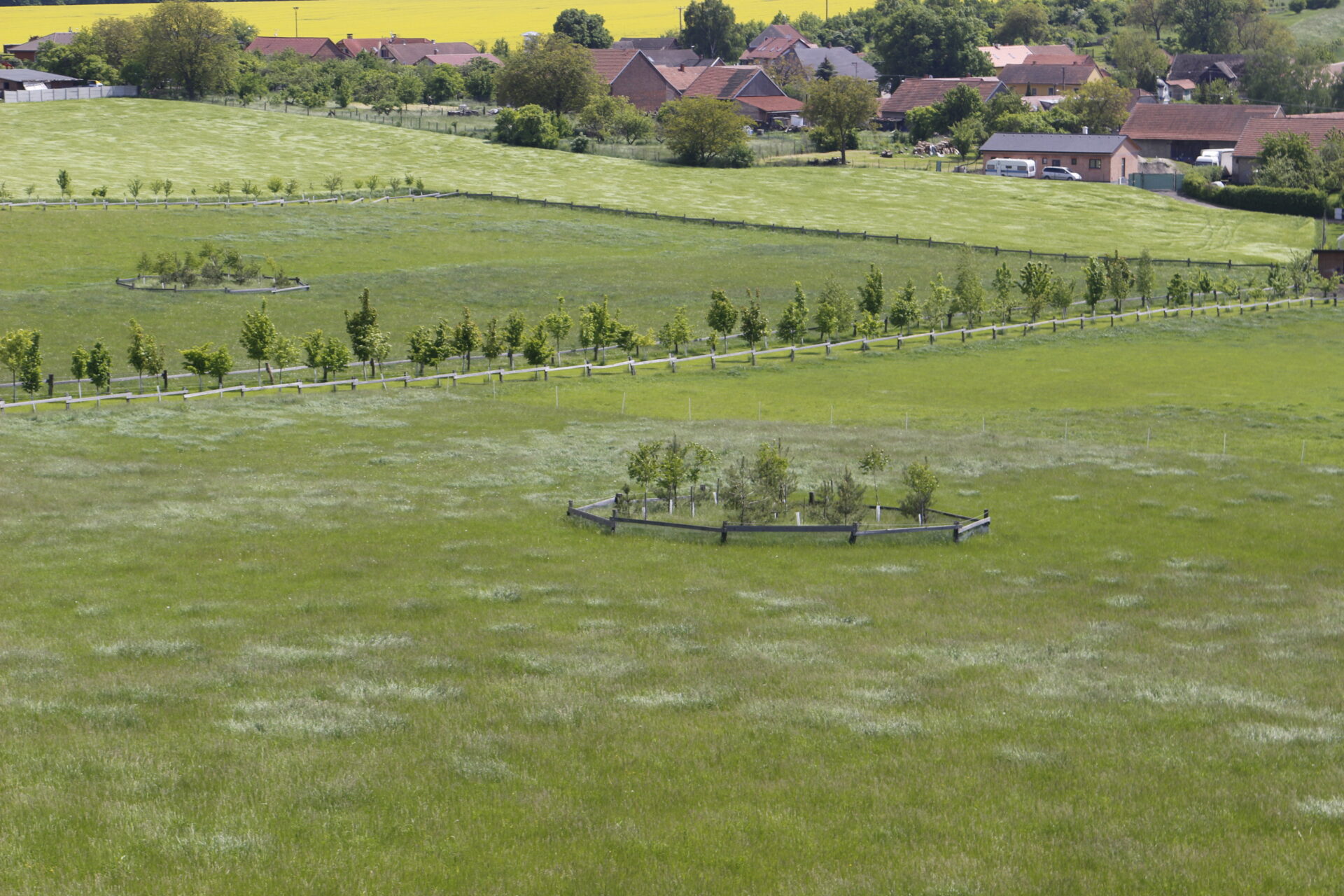
Newly established silvopastoral orchard in accordance with agri-forestry subsidy requirements © ČSAL
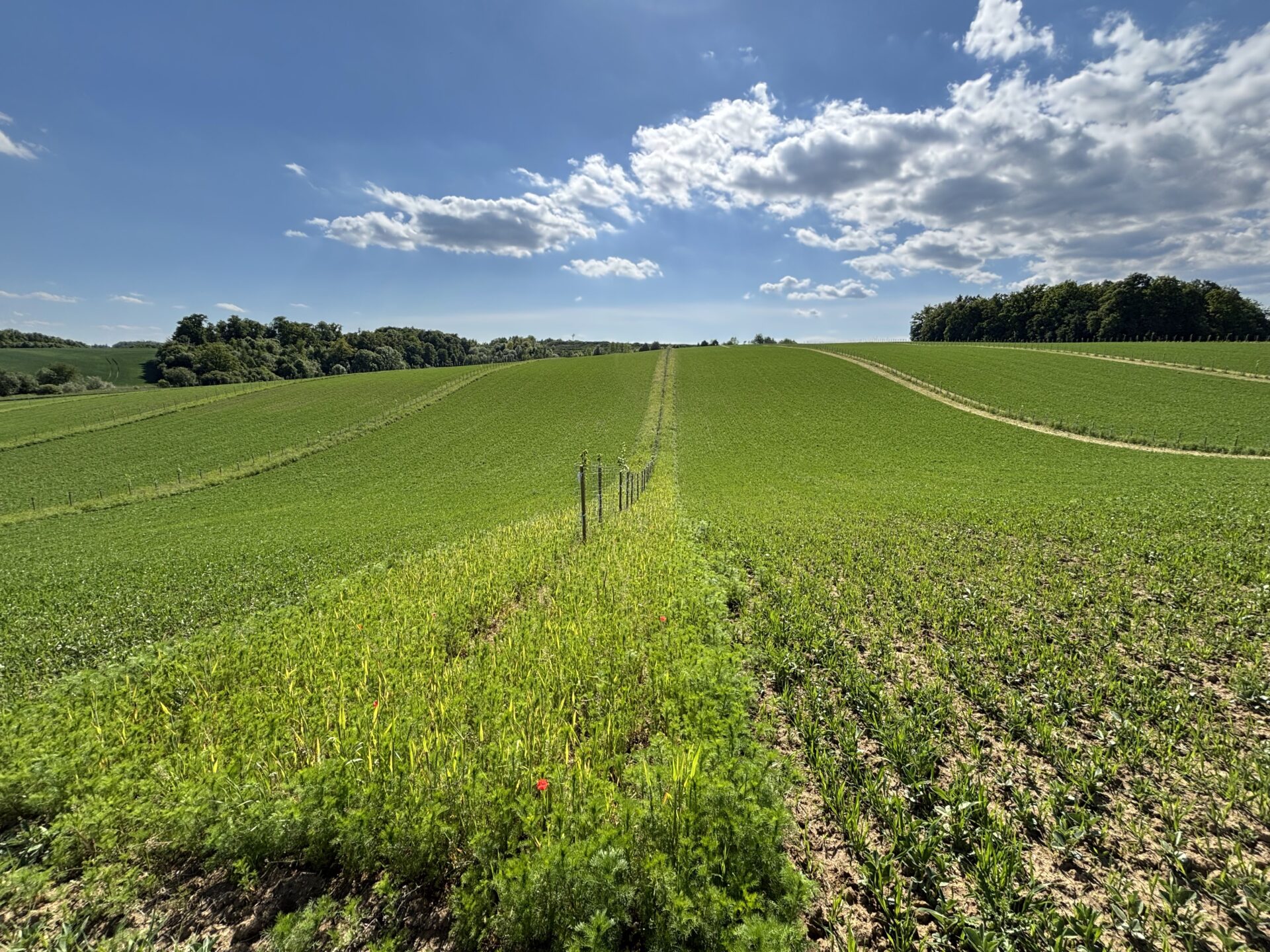
Newly established silvoarable system in accordance with agroforestry subsidy requirements © ČSAL
Czech Association for Agroforestry
The Czech Association for Agroforestry (www.agrolesnictvi.cz) (ČSAL) was founded in 2014 by a group of scientists, farmers, and agroforestry enthusiasts. The aim of the association is to inform the public about opportunities and innovations in agroforestry and to provide farmers with information about this type of land management.
It has also been successfully involved in various national and international projects focused on research, outreach, and the implementation of agroforestry in practice. ČSAL is also the Czech branch of the European Agroforestry Federation.
The Czech Agroforestry Association is an open organization that continues to grow, and its membership base is expanding. Thanks to this, people from different professions who care about the state of our landscape can connect and cooperate.
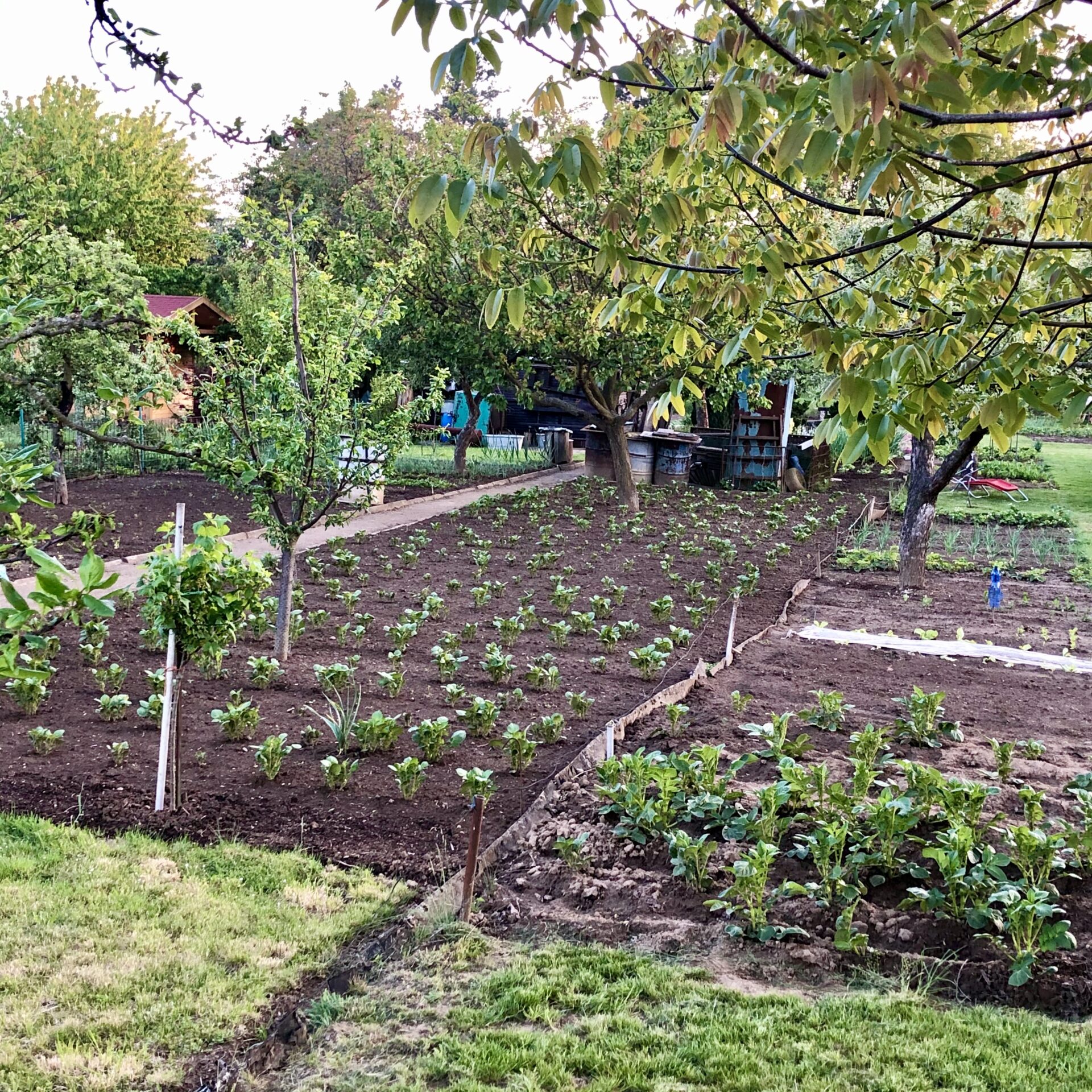
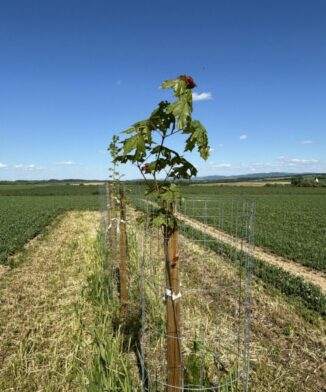
Home gardens & newly established silvoarable system in accordance with agroforestry subsidy requirements © ČSAL
Learn more and contact ČSAL