
About
Enriching European Landscapes with Agroecological Practices (EELAP)
Agroecology Partnership Project (1st co-funded call)
April 2025 – June 2028
A transdisciplinary, multi-actor initiative aiming to foster agroecological transition through Living Labs across Europe
EELAP is a European research and innovation project supporting the transition to agroecological landscapes with main focus on agroforestry. By integrating agroecology at the farm and regional level within six Living Labs, it aims to empower farmers, advisors, researchers, and policy makers to co-create and adopt practical solutions that are socially fair, environmentally sustainable, and economically viable.
EELAP Living Labs are user-centred, real-life innovation ecosystems where stakeholders jointly explore, co-design, and evaluate solutions that advance the transition toward agroecology.
Agroforestry is considered as one of the most effective agroeoclogical practices that directly contributes to:
- resource and nutrient recycling,
- input reduction,
- improved soil and animal health, enhanced biodiversity,
- synergies between systems components, and
- diversified on-farm income.
EELAP utilises agroforestry as a key lever for advancing agroecological transition at landscape scale.
Stay up to date with our latest activities:
- Kickoff meeting: Launched collaboration across 7 countries.
- Living Lab events: Local stakeholder engagement for co-creating agroecological innovations.
- Hi-safe training INRAE.
5 Living Labs (DE, SL, SK, IE, HU), 7 countries, over 60 farms and local actors in co-design of agroecological solutions
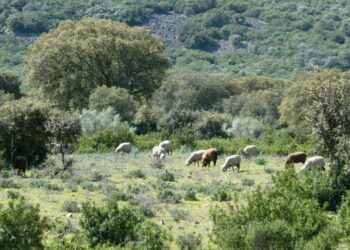
Agroforestry in Practice: Focus on alley cropping, silvopasture, rotational grazing and landscape-level tree integration
Triple Impact:
Environmental, Social,
Economic dimensions covered

Policy Integration: Supporting design and reform of policy schemes
Partners
European Agroforestry Federation (EURAF)
National Forest Centre (SK)

DeFAF – German Agroforestry Association (DE)

Hungarian Permaculture Association (MAPER) (HU)

Teagasc Forestry Development (IE)

University of Ljubljana, Agronomy Department (SI)

INRAE – National Research Institute for Agriculture, Food and Environment (FR)

Agroscope – Integrative Agroecology (CH)